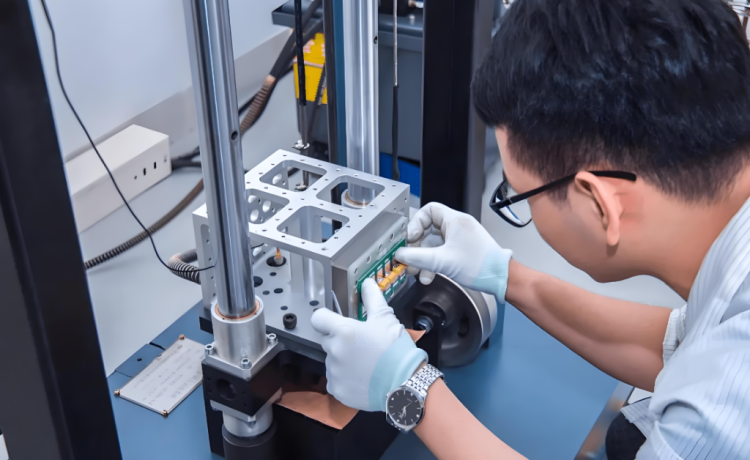
Materials are the foundation of modern innovation. From the lightweight composites in an airplane wing to the steel beams supporting a skyscraper, their properties determine safety, reliability, and performance. But how can we be certain that a material will behave as expected under real-world conditions? The answer lies in mechanical testing. This crucial process provides the data engineers and scientists need to design and build with confidence.
Mechanical testing involves subjecting materials and components to various forces to measure their response. These tests reveal critical properties like strength, hardness, and durability. By understanding these characteristics, we can predict how a material will perform throughout its service life. This article will explore the fundamentals of mechanical testing, covering its importance, common methods, and the valuable information it provides.
Why is Mechanical Testing So Important?
At its core, mechanical testing is about managing risk and ensuring quality. It’s a non-negotiable step in product development and quality control across countless industries, including aerospace, automotive, construction, and medical devices. The data gathered from these tests serves several vital purposes.
First, it validates material selection. Engineers can compare different materials to find the one best suited for a specific application, balancing factors like cost, weight, and performance. Second, it informs design. Understanding a material’s limits allows engineers to create parts that can withstand expected stresses without failing. Third, mechanical testing is essential for quality assurance. It confirms that raw materials and finished products meet required specifications and industry standards, preventing catastrophic failures and ensuring public safety. Finally, it drives innovation by helping researchers develop new and improved materials.
Common Types of Mechanical Testing
The field of mechanical testing encompasses a wide array of methods, each designed to evaluate a specific property. The choice of test depends on the material being analyzed and the conditions it will face in its intended application. Let’s look at some of the most common types.
Tensile Testing
Perhaps the most fundamental form of mechanical testing, tensile testing involves pulling a sample apart until it breaks. A standardized specimen, often shaped like a dog bone, is placed in a universal testing machine. The machine applies a controlled pulling force (tension) and measures the material’s elongation.
This single test provides a wealth of information, including:
- Ultimate Tensile Strength (UTS): The maximum stress a material can withstand while being stretched or pulled before breaking.
- Yield Strength: The point at which the material begins to deform permanently (plastically).
- Ductility: A measure of how much a material can deform before it fractures, often expressed as elongation or reduction in area.
- Modulus of Elasticity: Also known as Young’s Modulus, this indicates the material’s stiffness.
Compression Testing
As the opposite of tensile testing, compression testing involves pushing or squeezing a material. This test determines how a material behaves under crushing loads. It is particularly important for materials used in applications where they will be under constant pressure, such as concrete pillars or engine components. The test measures compressive strength, which is the capacity of a material to withstand loads that tend to reduce its size.
Hardness Testing
Hardness is a measure of a material’s resistance to localized plastic deformation, such as a scratch or indentation. Hardness testing is a quick, inexpensive, and often non-destructive form of mechanical testing. It is commonly used for quality control on manufacturing lines.
There are several methods for hardness testing, but most involve pressing a standardized indenter into the material’s surface with a specific force. The size or depth of the resulting indentation is then measured. Popular methods include:
- Rockwell Hardness Test: Measures the depth of penetration of an indenter.
- Brinell Hardness Test: Measures the diameter of the indentation left by a hardened steel or carbide ball.
- Vickers Hardness Test: Uses a diamond pyramid indenter and is suitable for a wide range of materials.
- Knoop Hardness Test: A microhardness test used for small areas or brittle materials.
Fatigue Testing
Many components fail not because of a single overload, but due to repeated, smaller loads over time. This phenomenon is known as fatigue. Fatigue testing evaluates a material’s ability to withstand cyclic loading. During the test, a sample is subjected to repeated stress cycles until it fails. The results are often plotted on an S-N curve (Stress vs. Number of cycles), which helps engineers predict the service life of a component under fluctuating loads. This type of mechanical testing is critical for parts that experience vibration or repeated motion, like aircraft wings or automotive suspension parts.
Impact Testing
Impact testing measures a material’s ability to absorb energy and resist fracture under a high-rate load. It essentially determines the material’s toughness. The most common methods are the Charpy and Izod tests. In these tests, a weighted pendulum is swung from a set height to strike a notched specimen. The energy absorbed by the sample during fracture is calculated by measuring the height to which the pendulum swings after breaking the specimen. This test is crucial for assessing a material’s susceptibility to brittle fracture, especially at low temperatures.
The Role of Mechanical Testing in Product Development
Mechanical testing is not just a final checkpoint; it is an integral part of the entire product lifecycle.
- Research & Development: Scientists use testing to characterize new alloys, polymers, and composites. This data helps them understand the fundamental properties of these new materials and identify potential applications.
- Design & Engineering: Engineers rely on mechanical testing data to create robust and efficient designs. They use simulation software (Finite Element Analysis) that is populated with material properties derived from physical tests. This ensures the virtual model accurately reflects real-world performance.
- Manufacturing & Quality Control: During production, mechanical testing is used to verify that incoming raw materials meet specifications. It is also used to check finished products to ensure that manufacturing processes, like heat treatment or welding, have not negatively affected the material’s properties.
- Failure Analysis: When a part or structure fails, investigators use mechanical testing to determine the root cause. By testing the failed component and comparing its properties to the original design specifications, they can identify material defects, design flaws, or unexpected service conditions.
Frequently Asked Questions (FAQs)
Q1: What is the difference between destructive and non-destructive testing?
Destructive testing, which includes most forms of mechanical testing like tensile and fatigue tests, damages or destroys the sample to measure its properties. Non-destructive testing (NDT), such as ultrasonic or radiographic testing, inspects a material or component for flaws without altering its usefulness. The two are often used together to ensure comprehensive quality control.
Q2: Why are specimens for mechanical testing standardized?
Standardization is crucial for obtaining reliable and comparable results. Organizations like ASTM International and ISO define the exact dimensions of test specimens, as well as the testing procedures and equipment calibration. This ensures that a tensile test performed in one lab will yield the same results as a test on the same material performed in another lab anywhere in the world.
Q3: How does temperature affect mechanical testing?
Temperature has a significant impact on a material’s mechanical properties. Generally, metals become more brittle at low temperatures and softer or weaker at high temperatures. For this reason, mechanical testing is often conducted in environmental chambers that can simulate the specific temperature conditions a component will experience in service.
Q4: Can you perform mechanical testing on non-metals like plastics and composites?
Absolutely. The principles of mechanical testing apply to a wide range of materials, not just metals. Plastics, ceramics, composites, and even biological tissues are subjected to mechanical tests. However, the specific test methods and specimen preparations are often modified to account for the unique characteristics of these materials. For example, composites may be tested to measure the strength of the bond between layers (interlaminar shear strength).
Q5: What is a universal testing machine?
A universal testing machine (UTM) is a versatile piece of equipment designed to perform several types of mechanical testing, most notably tensile and compression tests. It can be fitted with different grips and fixtures to accommodate various sample shapes and test types, making it a cornerstone of any materials testing laboratory.
Final Words
Mechanical testing is the science of seeing how things break so we can build them better. It provides the empirical data that underpins safe and reliable engineering. Without the precise measurements of strength, hardness, and durability it offers, we would be designing in the dark. From the smallest medical implant to the largest bridge, this essential process ensures that the materials we use are fit for purpose. As technology advances and we demand more from our materials, the role of sophisticated and accurate mechanical testing will only continue to grow in importance.