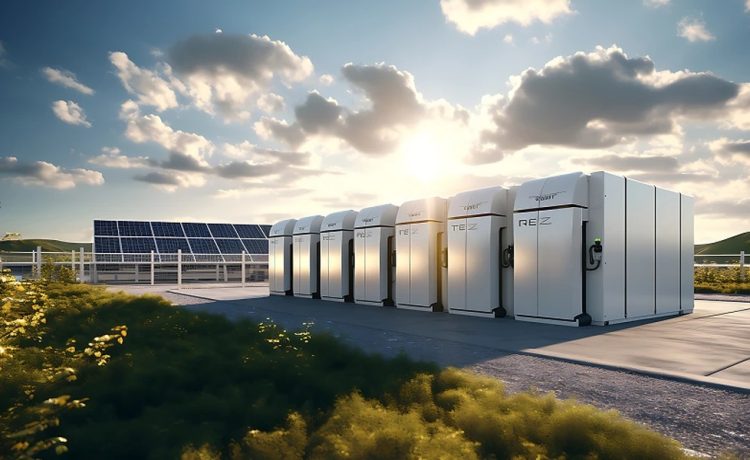
Solar panels generate power when the sun is out. Wind turbines generate power when the wind is blowing. A hyperscale data centre needs to stay online every second of every day, regardless of weather. Put those two facts side by side, and the obvious question follows immediately: how does a facility running on renewable energy actually stay up when its power source is, by nature, intermittent?
It’s a fair question, and one that deserves a specific, technical answer rather than a general assurance that everything works out fine in practice.
Why Intermittency Is the First Objection Anyone Raises
It’s a reasonable concern, not a naive one. Unlike a conventional grid connection drawing from a large, stable mix of generation sources, a facility tied more directly to a specific renewable source is inherently exposed to that source’s natural variability. A cloud outage measured in seconds can carry real financial and reputational cost for the businesses depending on that infrastructure, which is exactly why this question deserves a genuine answer rather than a reassurance.
Anyone evaluating a facility on technical merit is right to ask this before anything else, since the environmental credentials mean very little if the power supply itself can’t be trusted.
How the Green Data Centre Market Has Actually Addressed This
The answer isn’t a single technology but a layered approach, combining renewable generation with storage, grid balancing, and backup capacity to smooth over the gaps that any single power source will inevitably have. The green data centre market has developed considerably more sophisticated solutions to this problem over the past several years, moving well past the assumption that renewable and reliable are somehow in tension with each other.
What Actually Keeps Power Flowing When One Source Dips
Several mechanisms work together to smooth over the natural variability of any single renewable source:
- Battery storage that captures excess generation during peak output and discharges it during lower-generation periods.
- Hybrid power agreements that blend renewable generation with a conventional grid connection as a backup layer.
- Geographic diversification across multiple renewable sources, so a dip in one location doesn’t leave the whole supply exposed.
- On-site backup generation reserved specifically for genuine worst-case gaps in supply.
Why This Needs to Be Designed in From the Start, Not Added Later
Reliability planning of this kind works considerably better when it’s built into a facility’s power architecture from the earliest design stage, rather than retrofitted once a gap in supply has already caused a problem. Properly planned data centre services treat this layered reliability approach as a core part of the design brief, not an afterthought addressed only once a renewable power source has already been selected.
Retrofitting redundancy onto an already-operational facility is considerably more expensive and disruptive than designing for it from the outset, which is exactly why this planning sequence matters as much as the individual mechanisms themselves.
Why This Concern Rarely Gets a Direct Answer
Marketing materials around green data centres tend to lead with the environmental benefit and treat reliability as an assumed given, rather than addressing the intermittency question head-on. That’s understandable from a messaging standpoint, but it leaves a genuine, reasonable concern unanswered for exactly the audience most likely to be evaluating a facility on technical merit rather than sustainability branding alone.
A facility willing to walk through its actual redundancy architecture, rather than simply asserting reliability as a given, tends to earn considerably more confidence from a technically minded evaluator.
Renewable power and continuous uptime aren’t actually in conflict, but getting both right requires treating reliability as seriously as the sustainability claim itself, with real engineering behind it rather than an assumption that the two will simply work themselves out. A facility that can explain exactly how it manages this gap tends to be considerably more credible than one that simply doesn’t address the question.
The market has largely moved past treating this as an unsolved problem. What varies now is simply how transparently a given facility is willing to explain its own approach.
Evaluating a facility’s power architecture and want the reliability details explained clearly? Contact K2 Strategic to walk through how supply continuity is actually managed.