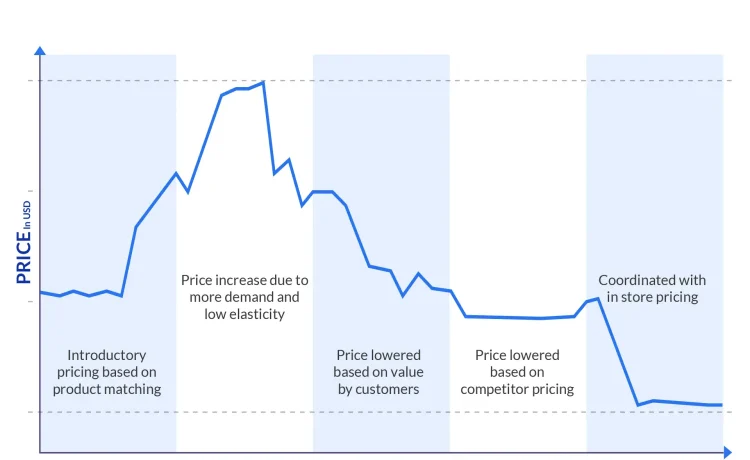
In the vast marketplace, pricing acts as both an art and a science. Imagine a tightrope walker—balancing precision and intuition. A small shift can make the difference between a perfect performance and a fall. In business, pricing decisions are that delicate. Set a price too high, and customers drift away; too low, and profit margins collapse. Pricing optimisation models offer a structured way to maintain this balance by analysing elasticity, demand, and market dynamics.
Understanding the Balance Between Value and Price
Every customer has a perceived value in mind—a mental threshold that defines whether a product feels “worth it.” The challenge for businesses is to identify this invisible line. Pricing optimisation models use data to bridge perception and profitability.
These models study how changes in price affect customer behaviour. For example, if a 10% price increase causes a 5% drop in sales, the product is considered price-inelastic. This insight helps businesses make decisions based on facts rather than instinct.
Professionals exploring business analyst training in Bangalore learn to interpret such data-driven signals, ensuring their pricing strategies balance customer psychology with organisational goals.
The Power of Elasticity: Measuring Customer Sensitivity
Elasticity is the beating heart of pricing optimisation. It quantifies how responsive consumers are to price changes, revealing crucial insights into market behaviour.
Products like medicines or fuel often show low elasticity—people need them regardless of price. Meanwhile, luxury goods or leisure items tend to have higher elasticity, where small price changes dramatically impact demand.
By understanding elasticity, businesses can predict the impact of promotions, discounts, or premium pricing. For instance, a coffee chain can test various price points to find the sweet spot where sales volume and profitability intersect.
Elasticity analysis isn’t confined to theory; it forms a practical toolkit for modern analysts navigating competitive markets.
Decoding Demand Curves: Mapping Customer Choices
A demand curve tells a story—how many units customers will buy at each price level. Visualising this curve helps companies decide whether to compete on volume or value.
In data analytics, the demand curve is derived through real-time data such as sales trends, regional preferences, and seasonal variations. Dynamic models even integrate external factors—economic shifts, competitor actions, or social media sentiment—to predict future responses.
Understanding how businesses adjust prices based on changing demand is a key skill for students.
Such models enable businesses to stay agile, aligning pricing strategies with evolving customer preferences.
Dynamic Pricing: The Engine of Modern Commerce
Think of dynamic pricing as a living organism—constantly adapting to its environment. Airlines, ride-sharing platforms, and e-commerce companies use algorithms that adjust prices in real time.
The goal isn’t simply to raise prices when demand is high but to optimise them so that revenue and customer satisfaction rise together. These systems consider supply levels, competitor pricing, time of day, and even user browsing behaviour.
For example, an airline may increase ticket prices during holidays but offer discounts for early bookings, maintaining a consistent load factor and profitability. Dynamic pricing thus becomes a conversation between data and demand—guided by predictive analytics.
Challenges in Implementing Pricing Optimisation Models
While data-driven pricing brings immense benefits, it also introduces challenges. Businesses must ensure transparency, avoid perceived unfairness, and comply with regulations. Algorithms, if not designed carefully, may reflect biases or trigger public backlash.
Moreover, implementing these systems requires a balance between automation and human oversight. Analysts must interpret the results within context—considering brand reputation, competition, and long-term customer loyalty.
Hence, pricing optimisation isn’t just about maths—it’s about maintaining trust while maximising value.
Conclusion
Pricing optimisation transforms guesswork into strategy. Through elasticity analysis, demand curve modelling, and dynamic pricing systems, companies can make informed, precise decisions that balance profitability with fairness.
In uncertain markets, where consumer expectations and costs shift rapidly, professionals skilled in pricing analytics are invaluable. By mastering techniques taught in structured programmes like business analyst training in Bangalore, individuals can guide organisations toward smarter, evidence-based pricing decisions.
Ultimately, pricing is a dialogue between business insight and customer perception—and data analytics ensures both voices are heard clearly.